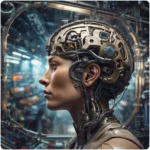


Technology shapes our world—but many amazing innovations and inventions have fascinating backstories we rarely hear in school.
From ancient tools to modern gadgets, humans have always been curious, inventive, and sometimes delightfully strange in their solutions.
A few notes before diving in:
- 📌 Some of these facts might make you pause and marvel at human creativity.
- 📌 Notice how problem-solving hasn’t changed much, just the tools we use.
- 📌 Share your favorite fact with a friend—you might spark a “wow!” moment.
1. The First Computer Was Invented in the 19th Century
- Charles Babbage designed the Analytical Engine in the 1830s
- Mechanical, programmable, and surprisingly sophisticated
- It could perform calculations automatically, a precursor to modern computers
💭 Reflection: Humans dreamed of “thinking machines” long before electricity or silicon. Innovation often begins as imagination.
2. The Internet Was Originally a Military Project
- ARPANET, created in the 1960s, connected research institutions
- Security and communication needs drove early development
- Today, it links billions worldwide in ways its inventors could scarcely imagine
💡 Perspective: Many tools we use daily started as solutions to very specific problems. Connectivity changed human society faster than anyone expected.
3. Ancient Greeks Invented a Form of Analog Computer
- The Antikythera Mechanism (circa 100 BC) predicted astronomical positions
- Complex gears worked like a mechanical computer
- Demonstrates the brilliance of ancient engineering
💭 Thought-provoking: Humans have been solving complex problems with technology for millennia—sometimes long before we assumed advanced machinery existed.
4. The First Video Game Was Created in 1958
- Tennis for Two, designed on an oscilloscope, let players “play” electronically
- Video games evolved from labs to a global cultural phenomenon
- Innovation often starts as a playful experiment
💡 Reflection: Play and curiosity are powerful engines of invention. What seems trivial today might be revolutionary tomorrow.
5. GPS Relies on Einstein’s Theory of Relativity
- Satellites must account for time differences caused by speed and gravity
- Without relativity adjustments, GPS would be off by kilometers each day
- Everyday tech depends on advanced physics most people never consider
💭 Perspective: We trust technology without realizing how deeply science shapes even the simplest conveniences.
6. The First 3D Printer Was Invented in 1983
- Chuck Hull created a method to layer materials to form objects
- Today, 3D printing produces everything from jewelry to organs
- An idea once futuristic is now accessible to hobbyists
💡 Thought-provoking: Human imagination plus experimentation can make science fiction a reality.
7. The Smartphone is Older Than You Think
- IBM Simon, released in 1994, had a touchscreen and email capabilities
- Predicted features of today’s iPhones and Android devices
- Innovation is often iterative, building on past attempts
💭 Reflection: Technology evolves rapidly, but each breakthrough has predecessors that paved the way.
8. Ancient Romans Had Central Heating
- The hypocaust system warmed baths and homes
- Floors were raised, hot air circulated underneath
- Comfort and engineering were priorities even 2,000 years ago
💡 Perspective: Technology isn’t new—it’s the human drive to improve life that repeats through centuries.
9. Leonardo da Vinci Designed Robots
- Da Vinci sketched a humanoid automaton capable of movement
- He imagined machines performing tasks centuries before industrial robots existed
- Creativity often precedes technical feasibility
💭 Reflection: Great minds blend imagination with technical insight, a formula still true today.
10. The First Email Was Sent in 1971
- Ray Tomlinson sent a test message between two computers
- The “@” symbol became iconic, connecting names to machines
- Simple innovations can trigger a revolution in communication
💡 Perspective: Small ideas can create massive societal shifts—technology magnifies human communication exponentially.
11. The Microwave Oven Was Discovered by Accident
- Percy Spencer noticed a candy bar melted near radar equipment
- Turned curiosity into invention, leading to the microwave oven
- Serendipity often fuels technological breakthroughs
💭 Thought-provoking: Sometimes observation, not intention, sparks revolutionary change.
12. QR Codes Were Originally Invented for Car Manufacturing
- Developed by Denso Wave in 1994 to track vehicles
- Now used globally for everything from menus to payments
- Technologies often find far-reaching applications beyond their origin
💡 Perspective: Innovation has ripple effects—an idea created for one purpose can change daily life in unexpected ways.
13. Ancient Engineers Built Earthquake-Resistant Buildings
- The Romans and Japanese used shock-absorbing foundations and flexible designs
- Many structures survived centuries of tremors
- Engineering often anticipates natural challenges, showing foresight and ingenuity
💭 Reflection: Sometimes solutions are both practical and ahead of their time—reminding us that necessity sparks invention.
14. The First Digital Camera Weighed 8 Pounds
- Invented by Kodak in 1975
- Captured images electronically long before smartphones
- Technology evolves dramatically, but the seeds are planted early
💡 Perspective: Every modern gadget is the result of decades of iterative innovation and daring experimentation.
15. Artificial Intelligence Has Roots in Ancient Philosophy
- Ideas of reasoning machines date back to Aristotle and his logic systems
- AI is a modern extension of a timeless human curiosity: understanding intelligence
- History informs our future in unexpected ways
💭 Reflection: Technology isn’t just tools—it’s the manifestation of human thought, creativity, and curiosity spanning millennia.