
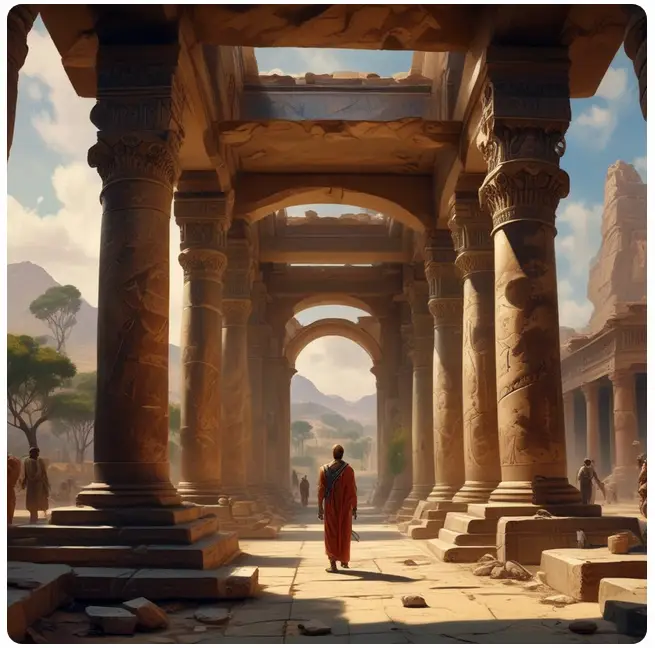

Ancient civilizations are full of amazing discoveries, strange traditions, and mind-blowing innovations that most textbooks skip.
From Egypt to the Mayans, Mesopotamia to the Indus Valley, these societies were ingenious, bizarre, and sometimes eerily modern.
A few notes before diving in:
📌 Try sharing a fact with friends—it’s a fun conversation starter!
📌 Read slowly—some facts might make you rethink history!
📌 Imagine the lives of these people; it helps connect you to the past.
1. The Great Pyramid of Giza Was a Technological Marvel
The Great Pyramid isn’t just a giant pile of stones; it’s a masterpiece of human ingenuity. Built around 2560 BC, it remained the tallest man-made structure for nearly 4,000 years. Engineers today still scratch their heads over how the ancient Egyptians moved multi-ton limestone blocks without cranes, trucks, or power tools.
💭 Think about it: Every stone was placed with a purpose, creating a monument that has survived millennia. Imagine building something today to last thousands of years—how would future generations perceive it?
2. Ancient Egyptians Used Honey as Medicine
Honey wasn’t just for sweet treats. Egyptians applied it to wounds and burns because of its natural antibacterial properties. They also ingested it to aid digestion.
💡 Perspective: Modern science confirms what they intuitively knew thousands of years ago. Sometimes, ancient wisdom still beats modern pharmaceuticals in simplicity. It makes you wonder what other “common” things around us carry hidden powers.
3. The Indus Valley Had an Advanced Sewer System
While many ancient cities struggled with waste, Harappa and Mohenjo-Daro had indoor plumbing and an advanced drainage system. Streets were lined with drains, and homes often had private bathrooms.
💭 Thought-provoking: Civilization isn’t just about fancy monuments—it’s also about the quality of everyday life. Perhaps we underestimate how forward-thinking these societies were.
4. Mayans Were Amazing Mathematicians
The Mayans independently invented the concept of zero—a breakthrough in mathematics. Their calendar tracked celestial events with amazing precision, aligning rituals and agriculture with the cosmos.
💡 Fun reflection: While we scroll through apps and calendars today, they were calculating time and space in ways that still impress modern scientists. Genius isn’t always obvious!
5. The Romans Had Fast Food
Ancient Rome had thermopolia, street food shops serving hot meals to busy citizens. Imagine grabbing pizza or soup in 1st century Rome—it was fast, cheap, and filling.
💭 Perspective: Convenience isn’t new. The Romans understood human needs: when life is busy, a warm meal on the go is priceless. Food habits truly connect us across time.
6. Ancient Greeks Had Social Media of Their Own
Graffiti and inscriptions on walls acted as ancient social media. Citizens shared gossip, political opinions, jokes, and love notes.
💡 Reflection: Communication has always been a human need. Even thousands of years ago, people wanted to be heard, make each other laugh, and influence their community. Sound familiar?
7. Chinese Civilizations Invented Paper Long Before Europe
Paper was invented around 105 AD in the Han Dynasty, revolutionizing record-keeping, education, and bureaucracy. Europe didn’t widely adopt paper until the 13th century.
💭 Thought-provoking: The ability to record knowledge shapes civilization. Imagine a world without paper—or modern technology. Every innovation is a stepping stone, connecting us across time.
8. Vikings Had Advanced Navigation
Vikings didn’t just rely on luck. They used sunstones and the position of the sun to navigate vast oceans. Longships allowed them to explore far beyond Scandinavia, combining daring with engineering.
💡 Perspective: Curiosity drives exploration. What motivates humans to take risks and chart unknown territories? Their courage still inspires modern adventurers.
9. The Aztecs Loved Chocolate—But Not Like We Do
Chocolate wasn’t sweet candy; it was a bitter drink, often spiced, used in rituals and as currency.
💭 Reflection: Foods we take for granted today often carried spiritual, economic, or social significance in the past. Next time you sip chocolate, imagine the sacred importance it once held.
10. Mesopotamians Created the First Written Laws
The Code of Hammurabi (1754 BC) regulated trade, justice, and daily life. Its famous “eye for an eye” principle shaped legal systems for millennia.
💡 Thought-provoking: Laws aren’t just rules—they’re reflections of culture, fairness, and human priorities. Even 4,000 years ago, societies grappled with questions of justice we still discuss today.
11. The Inca Used Quipus to Record Information
Instead of writing, the Incas used knotted strings called quipus for accounting and communication.
💭 Perspective: Knowledge doesn’t always need words. This is a reminder that creativity can solve problems in ways we might never imagine.
12. Ancient Egyptians Loved Board Games
Games like Senet were played by pharaohs and commoners alike. They weren’t just leisure—they symbolized the journey to the afterlife.
💡 Fun reflection: Play and strategy are timeless. Even in ancient times, humans understood the value of fun, learning, and mental challenge.
13. The Olmecs Carved Massive Stone Heads
Weighing tons and standing up to 3 meters tall, these heads required incredible planning and labor. Their purpose is still debated—political, ceremonial, or ancestral.
💭 Reflection: Monumental effort often serves meaning beyond what we fully understand. Sometimes the story is as intriguing as the artifact itself.
14. Japanese Ancient Villages Had Complex Irrigation
Yayoi period rice paddies used controlled water flow to increase yield. Sophisticated systems supported population growth and stability.
💡 Thought-provoking: Even small communities mastered engineering challenges. Innovation isn’t reserved for empires—it’s human nature.
15. Ancient Persians Built the First Road Networks
The Royal Road, over 2,700 km, allowed trade, communication, and empire management. It’s a precursor to our modern highways.
💭 Perspective: Connectivity is timeless. Roads don’t just move goods—they connect people, ideas, and cultures. Infrastructure shapes society more than we realize.